Writers’ critique groups
ODETTE ELLIOTT
I have a friend who lives in County Durham. Sadly she is too frail to come and visit us any more, so we keep in touch by ‘phone. She is excellent at embroidery and really enjoys it. She produces some beautiful work. I can appreciate her creations but know very little about the mechanics of her craft. (I didn’t progress much further than enjoying doing French knots at school).
What has this to do with the Buzz About Books blog and our emphasis on writing for children? When I describe to my friend how valuable I find my critique group, she asks me what the group does. I reply, “They listen to my stories and say what they find works and is enjoyable and bring out what they think does not work.
“Oh I wouldn’t stand for that!” she replies. “I’d end up punching them on the nose”!
I would like to defend the existence of critique groups. At our group in Islington we are careful not to destroy a person’s work, but when we can, we offer opinions on how the story could work better. The best thing for the author to do is to listen to the criticism and go away and mull it over. Sometimes one needs to stick to one’s guns. Sometimes a really helpful piece of advice can save the whole story. It is amazing how many times one can read one’s own story and think that it works fine, only to discover that something is not clear to a reader.
I usually write picture book texts, so trying them out on young children would not work very well. A good picture book is a wonderful and sometimes a magical combination of story and illustration. Our critique group members are used to using their imagination about the likely illustrations when they listen to the story.
When listening to criticisms, it is good to remember that the ideas expressed are simply other peoples’ opinions. In the end we have to decide how to keep the story our own and to make it as good as we can.
De-junking One’s Life by Elizabeth Hawksley
 I’m a great believer in periodically de-junking one’s life. I do try not to hoard things but I’m not a natural minimalist and clutter keeps creeping in. I enjoy having ornaments around which friends have given me. I like buying unusual earrings and necklaces in foreign street markets. And, above all, I love collecting books.
However, I realized that enough was enough when I found myself blowing dust off all those little ornaments rather than dusting them properly. There were just too many. I’m asthmatic and the result was Not Good. Time for a change. I gave them a proper wash, put a few aside to keep, and said good-bye to the rest before taking them down to Oxfam. Friends are encouraged to give me something ephemeral instead, herbes de Provence, say, or soap.
I’ve also learnt to be more ruthless about my wardrobe and chuck things I don’t wear. These days it’s strictly buy something new and something old has to go. It doesn’t always work but I’m a lot better than I used to be.
But the real problem is books. I have over two thousand. There are bookcases in almost every room and on the landings, and most of the alcoves have shelving for books as well. I was getting to the stage where they were beginning to pile up in the corners of rooms. Well, if I’m honest, there have been piles of books on the floor for years but I hadn’t seen them. Now I did.
So, this week, I’ve been tackling the books. A number of academic books from my M.A. course went – they are out of date now. I re-read those novels I wasn’t sure about and was surprised how many I was happy to let go. I’d loved them once but now they no longer appealed in the same way. Then there were books which I’d been given but didn’t really want. I’d thanked the donors nicely and now the books could go. The charity shop would get some money, I’d get some space.

The real problem is with the thousand or so books which comprise my research library. As a Historical novelist, I need to check on not only the obvious things like housing, costume, travel, food, wages and so on, but also more obscure information. I have books on smuggling in Cornwall in the early 19th century; theatrical lighting (candles, paraffin lamps and, later, gas) in the mid 19th century; an entire shelf on Wellington’s army in Spain during the Peninsular War; how refugees fleeing the French Revolution managed to support themselves in London, and a host of other out of the way subjects. It’s much more difficult to prune books here.
Nevertheless, this week, in six separate visits, I managed to take over one hundred books to the new Oxfam Book Shop in Islington. So, can I now report that my bookshelves are inspiringly freed up? Not quite. But I can see a lot more of my floor! What’s more, I feel incredibly virtuous.
And it’s a lot cheaper than therapy.
NaNoWriMo
National Novel Writing Month is with us again. November – the month to write 50,000 words of brand spanking new NOVEL in a month. No break in flow, don’t worry about over-thinking, over-editing and over-tiredness. I know of a crime fiction writer who got her first book deal from a book she wrote in this scheme last november. Well done you girl. I think it’s a real adventure! Will I try it? YES. I think I’ll make my own rules though… check http://www.nanowrimo.org for more info. As William Faulkner said – ‘Don’t be a writer, be writing’. See you in December….
Hurray for Terry Pratchett by Elizabeth Hawksley
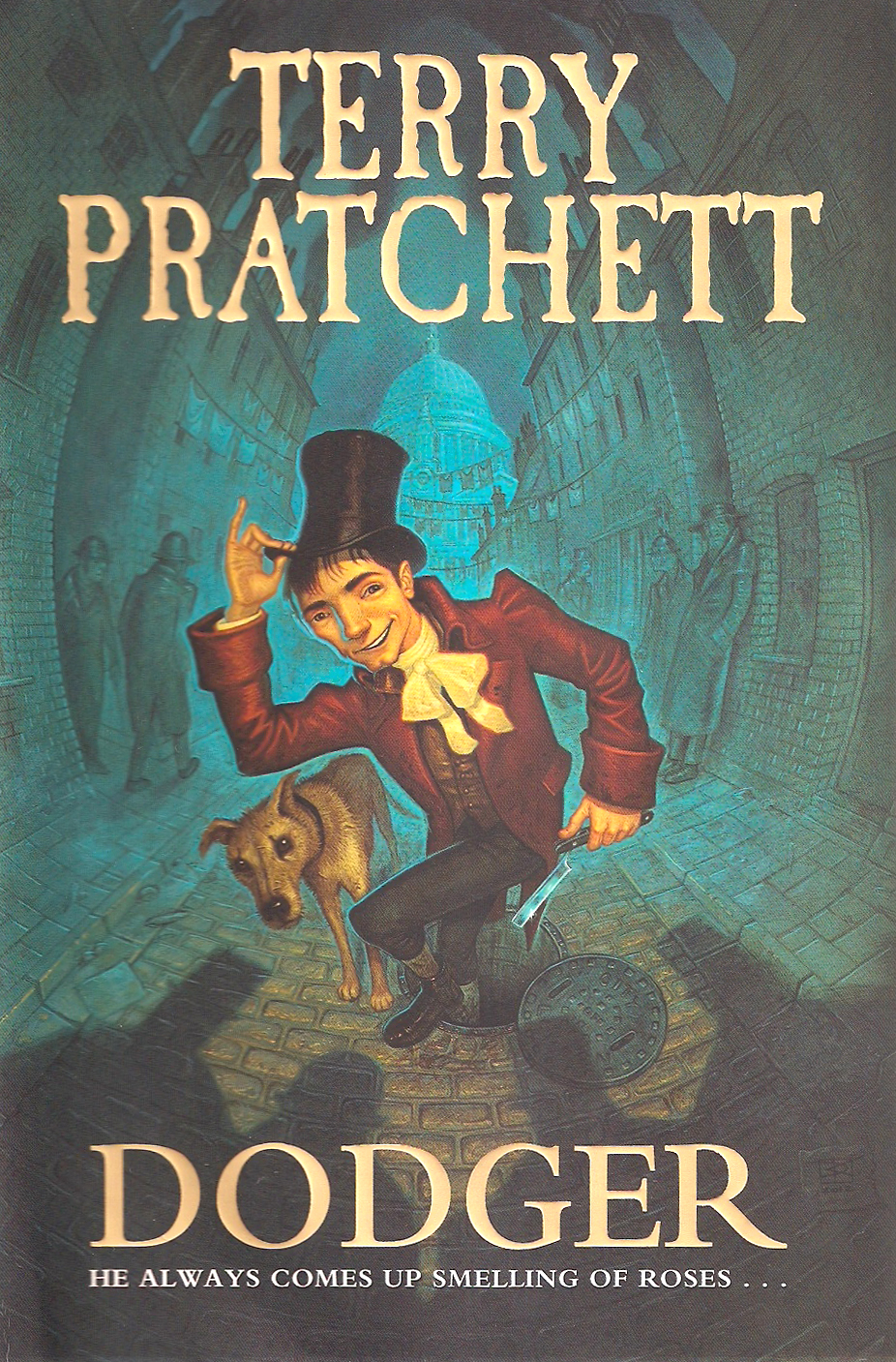 I’ve just read Terry Pratchett’s new children’s book Dodger, a terrific take on popular Victorian tales of low life but with a 21st century twist. Modern children enjoy reading about a far grittier reality than was offered to young 19th century readers. We are in London in the 1840s. Seventeen-year-old Dodger is a ‘tosher’, scavenging in London’s old Roman sewers for a living. It is dark, dangerous and smelly work but Dodger is nimble, quick-witted and knows exactly how to work the system. The law has never yet laid a finger on him and he intends to keep it that way.
But when Dodger rescues a mysterious young lady from a murderous attack, things start to get difficult. The new Metropolitan Police gets involved; Charles Dickens of the Morning Chronicle scents a story and a dangerous foreign assassin comes to London. Dodger will have his work cut out to keep the lady safe, discover who she is and why the Foreign Office is taking an interest – and stay alive.
I loved this book. Pratchett writes brilliantly. It’s a tale full of surprises: there are nods to various Dickens novels (Dodger himself surely has an ‘Artful’ cousin), Mayhew’s London Life, Bazalgette’s dream of a new sewerage system, the astute millionaire Miss Burdett-Coutts, Benjamin Disraeli, shopping in Savile row, the notorious (if fictional) Sweeney Todd, and scores of other contemporary references. There is a philosophical element, too, which gives the book added depth, as Dodger works out what sort of man he wants to become. I have an MA in Victorian Studies and all this, together with the lively Victorian low-life slang, hugely increased my enjoyment.
The story is a cracker. I was hooked, frantically turning over the pages to see what was going to happen next, every now and then shrieking with laughter. It’s glorious mixture of inventiveness, fun and slightly massaged history. It illuminates London’s Victorian underworld brilliantly. Dickens would have loved it.
Light Poetry
The Poetryjoe Show is currently in the middle of it’s nine-performance run for the Whitstable Satellite 2012 , part of the Whitstable Biennale. I was very pleased to be invited by Joseph Coelho to participate in the creation of this show earlier this year. I felt there was a perfect match between Joe’s skills as poet and performer and mine as illustrator, paper engineer and general creative DIYer.
What started as a fairly simple idea soon turned into a quest to find as many different ways as possible of projecting and animating imagry alongside Joe’s words using an overhead projector. The show, aimed at 4 to 7 year olds, remains deliberately low-tech, providing an antidote to fast developing technology. So far, it’s been well received.
Working on the project has been a big learning curve for me, both in terms of using my illustrations in new ways, as well as being part of a collaborative team effort.
The show, which takes place at the Horsebridge Arts and Community Centre, finishes this weekend. For further information or to book the show, please go to the Word Pepper site.
JOHN O’LEARY
Saturday 15th September – 11.15 am, 3.15 pm
Sunday 16th September – 3.15 pm
Horsebridge Arts & Community Centre, 11 Horsebridge Road, Whitstable, Kent CT5 1AF

Fun and Games
ALISON ALLEN-GRAY
Like some others I have spoken to on the subject, I was at first bemused by the Olympic opening ceremony. We seemed to be moving from The Shires of The Hobbit to Lark Rise to….goodness, what’s Kenneth Branagh doing in that natty costume? Is he The Controller from Thomas the Tank Engine? Aha…no. By this time I was beginning to grasp the concept and found myself completely bowled over by the technical achievement (we’re good at this stuff, we Brits) and enchanted by the whole eccentric, eclectic swirl of life and energy. But, of course, what delighted me most was that Children’s Literature got a look-in – no, more than a look-in. We had acres of trampolines (gosh that looked fun!) we had a skyfull of Mary Poppins, we had J K Rowling and the Dementors. I was chuffed, really chuffed, that Children’s Literature was given a prominent platform in this flamboyant collage of Britishness. It is no more than it deserves. Oh, and don’t get me started on the fact that Joey the War Horse was on the roof of the National Theatre waiting to rear up in salute as the Queen came down the Thames on her barge. I don’t know whether Michael Morpurgo’s eyes were dry at that point, but mine certainly weren’t…
Return to Dillington by Elizabeth Hawksley
 I’ve just spent an interesting week teaching Creative Writing for Pleasure at the wonderful Dillington House in Somerset.
Not only is the house itself beautiful, so are the extensive grounds and, on our last two days when the sun finally came out, I took my class outside. We found a bench under a tree in a secluded corner of the garden, borrowed some chairs (with permission) from the conservatory and settled down to work.
There was the faint scent of new mown grass and bees buzzed quietly in the nearby border. In another corner of the garden, I could see someone from the art class quietly sketching flowers. A gardener trimmed the edges of a flower bed nearby.
It both calmed the soul and inspired the spirit. Looking across at the house, its Ham stone golden in the afternoon sun and the turrets and tall barley twist chimneys silhouetted against the blue sky, I thought: I could get used to this! And at half-past four when the class ended, there would be a choice of delicious cakes for tea.
I’ve only ever seen Dillington in August but, next February, I shall be back to teach The Infinite Variety of English. This will be a look at the huge variety of writing in English, from diaries and love letters to novels and poems. It will range from the inspiring to the abysmal – a touch of really bad writing can also be illuminating! It should be fun.
I’m also looking forward to seeing Dillington in winter, perhaps under a blanket of snow with the skeletons of its magnificent trees glistening with frost. It’s sure to look wonderful.
Photo: our view of Dillington House
Tribute to Margaret Mahy – by Nikki Bielinski
 Margaret Mahy
Children’s Author
March 21, 1936 – July 23, 2012, aged 76.
Margaret Mahy, who at the age of 70 was awarded the prestigious Hans Christian Andersen award for her contribution to children’s literature, has died from cancer.
Mahy, from New Zealand, was also twice a recipient of the UK’s Carnegie medal and was awarded the order of New Zealand in 1993. A prolific writer, she published widely, including at least 100 picture books, 40 novels and 20 short stories. Her work was always highly original and inventive. She had a strong sense of the supernatural, the magical and the quirky. The first book of hers I read was The Boy Who Bounced – the quirky inventiveness was like a breath of fresh air.
Mahy’s picture books, inventive short stories, such as The Man Whose Mother Was a Pirate (1972) and The Boy Who Was Followed Home (1975), and teen novels, such as The Catalogue of the Universe (1985) or The Magician of Hoad (2008) were very popular with her intended audience. Her bubble of imagination travelled further than many other published writers Her characters moved easily in these inventive worlds, which created vivid and exciting fiction. The unexpected… always happened.
Her first story, Harry Is Bad, was written when she was only seven.
In her native New Zealand, Mahy won several awards including the Sir Julius Vogel award in 2006 for services to science fiction and fantasy.
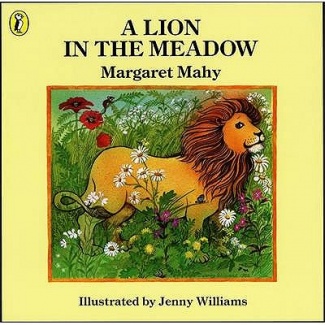
It was while she was working as a librarian that an American publisher spotted one of her stories in a Children’s Journal. It was from this her first picture book was published, A Lion in the Meadow (1969). Within a year, Mahy had six books published from her stockpile.
It was a stockpile of more than 100 stories she had written over fifteen years while being a determined single mum. She worked as a librarian during the day and wrote at night.
At the time of her death, Mahy had completed a new picture book, The Man from the Land of Fandango, illustrated by Polly Dunbar, which Clarion Books will release on October 23.
Born in Whakatane, on the North Island of New Zealand, Mahy, The daughter of an English father and New Zealand mother, she was brought up on English literature, including the books of RM Ballantyne and Robert Louis Stevenson. When asked about her childhood influences and their impact on her writing, Mahy said, “I found it difficult to write a specifically New Zealand story because I got all of my magical displacement from Beatrix Potter, Winnie the Pooh and Swallows and Amazons.”
Mahy lived by the sea with a many cats and could be reclusive. She loved going on long walks, which helped sort out what she was trying to write. In her stories, Mahy could make the supernatural feel real. She always believed the supernatural was there, whether others believed it or not.
She wanted to share her love of story with as many people as she could. She told parents, “’read to your kids; share stories and they will enrich your lives in ways you can’t even begin to imagine”.
She is survived by two daughters, Penny and Bridget.
Fourteen years ago Margaret Mahy had a tattoo of a skull with a rose in its teeth on her right shoulder. She was 62 and had at last disregarded her mother’s advice never to get a tattoo – “you’ll only be sorry”.
Mahy decided “I haven’t got a lot of time to be sorry,” she said, “and it might be rather fun to have a pirate tattoo.”
… and reading Mahy’s stories for generations to come will also be fun, extraordinary, inspirational and boundary pushing.
Book talk from Down Under
Last week we had a Very Special Visitor to our writers’ group session. Paula O’Sullivan, a librarian in a state primary school in Sydney, Australia came to our meeting. We listened with awe to her description of the purpose-built library that has just been provided for her school, complete with dedicated classroom, interactive whiteboard etc. Australia’s way out of recession was to invest in infrastructure projects…
And then we talked about books and what gets her kids reading. As well as the obvious wizard and fairy series that have winged their way from the UK, she listed a number of Australian authors which were not so familiar to many of us. Picture book titles included: Possum Magic by Mem Fox; Who sank the Boat? by Pamela Allen; The Red Tree by Sean Tan.
Other books and series popuar with her kids are: Diary of the Wimpy Kid; Zac Power; and Jeronimo Stilton. She also introduced us to two charming video clips on You tube: ‘The lost thing’ (look for the longer version), and ‘It’s a book’ which is a charming advert for – well, a book!
We ended with a rare moment in the 17-year history of our meetings – a photograph(!) of Paula and some group members, with copies of some of the picture books the group has produced over the years.
MARION ROSE

Organized Chaos by Elizabeth Hawksley
 I am in the throes of taking over the editorship of the Children’s/Young Adults book reviews for the Historical Novel Society Review, which comes out quarterly. I’ve spent the last week or so getting in touch with the Publicity Managers/Press Officers of, so far, twenty-odd publishers.
After a flurry of phone calls and emails (together with the inevitable DAEMON FAILURE notices when I discover that the person I’m emailing has moved on), suddenly, I’m in contact with lots of new people, all passionate about children’s books, who are happy to send catalogues and books to review. I am already amassing a growing pile of books which, in due course, I shall send out to my small but select band of adult reviewers and various eager young cousins (aged between seven and seventeen) who enjoy letting me know their opinions.
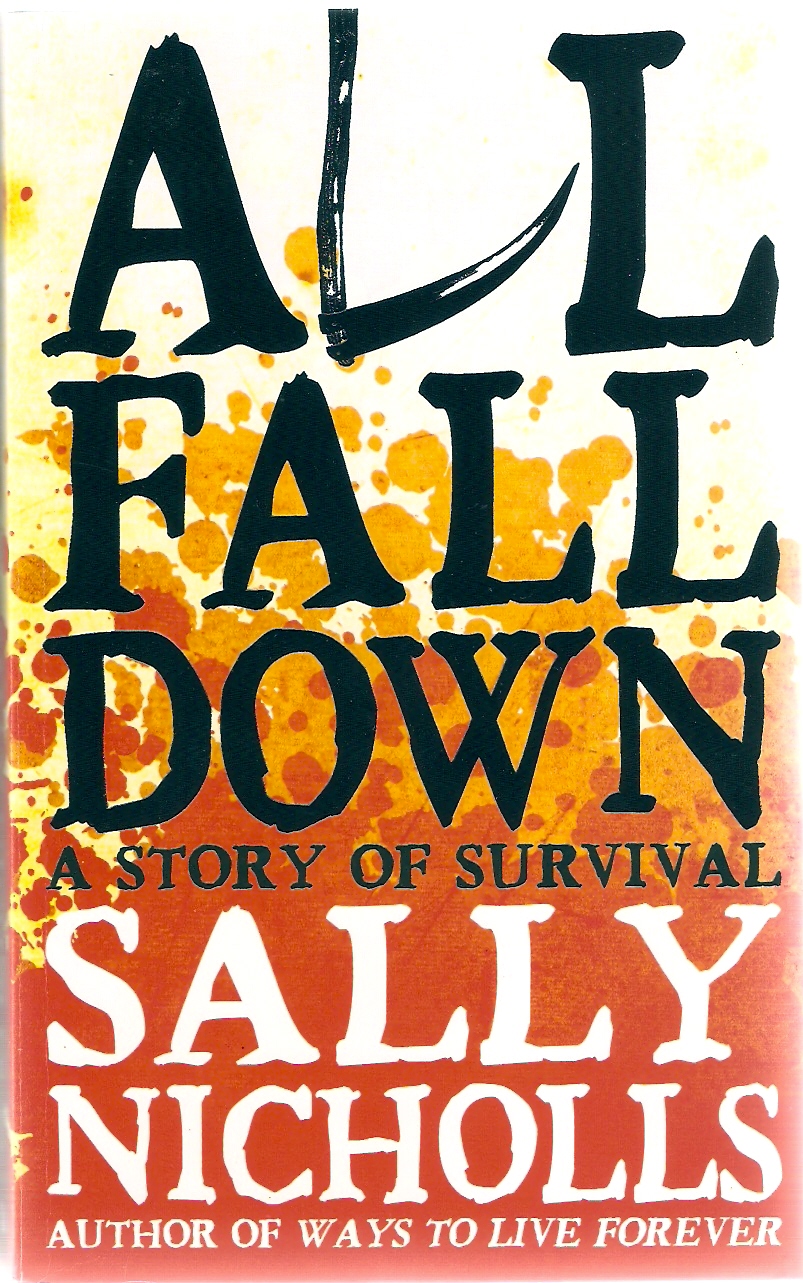
To take three of the books at random. The first book that arrived 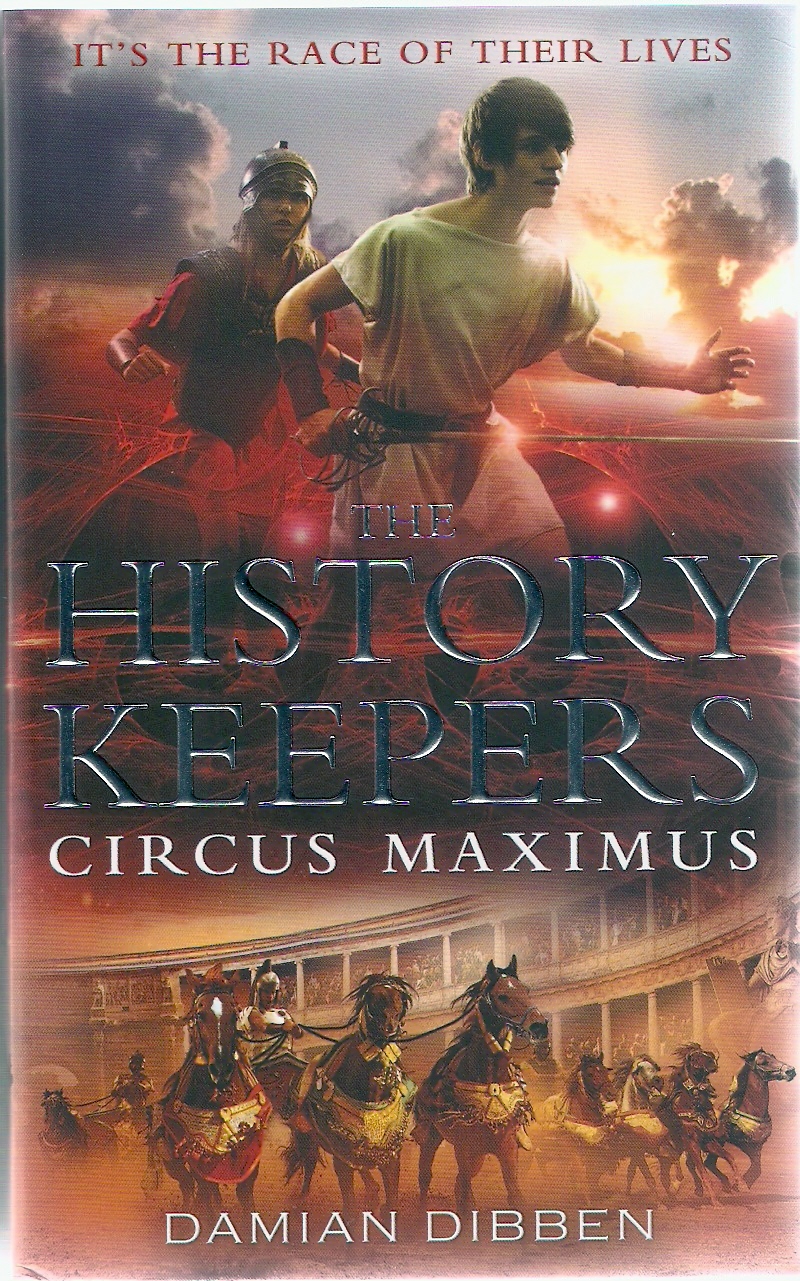 was All Fall Down by Sally Nicholls (Scholastic), set during the Black Death in 1349. The author is interested in how her thirteen-year-old heroine reacts to the unfolding cataclysm of unimaginable proportions. The result is horrifying, moving and gripping.
Damian Dibben’s The History Keepers: Circus Maximus (Doubleday) is a time-slip story which promises thrills and spills ‘in the dangerous heart of Imperial Rome’. This is obviously a book with ‘boy appeal’. It is the second in the series and the person who reviewed the first book is dying to get her hands on this one.
 I am a Cornelia Funke fan, so I’m delighted to get her new book Ghost Knight (Orion) and can’t wait to read it. Her books have sold over 16 million copies world wide, and I can understand why. They are imaginative, exciting, quirky and you are yanked into the story which will not let you go until the very last page.
It really feels, after so many years in the doldrums, that historical novels are enjoying a renaissance. I’m thrilled to bits. However, I can see that I shall have to be super-efficient and keep track of which book is where to ensure that all goes smoothly. It will be a steep learning curve.
I’ve warned my postman.
 Buzz about Books