Susie Meggitt: Fantastic Mr Fox is fantastic
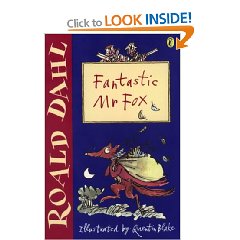
I was really into ballet and mystery books as an under-ten so Fantastic Mr Fox wasn’t my favourite book then, but having recently re-read it and seen with my grown-up eyes that Fantastic Mr Fox has a practically perfect plot, it is officially my favourite now. Not that anyone needs convincing of Roald Dahl’s incredible talent but some decades on, I can see clearly how his mastery over plot and character ensure children aged 2 to 102 are entranced by the story from start to finish.
Let’s start with the first paragraph:
Down in the valley there were three famers. The owners of these farms had done well. They were rich men. They were also nasty men. All three of them were about as nasty and mean as any men you could meet. Their names were Farmer Boggis, Farmer Bunce and Farmer Bean.
I know who my enemies are.
In chapter 2, we meet our hero.
‘On a hill above the valley there was a wood. In the wood there was a huge tree. Under the tree there was a hole. In the hole lived Mr Fox and Mrs Fox and their four small foxes. Every evening as soon as it got dark, Mr Fox would say to Mrs Fox, ‘Well, my darling, what shall it be this time? A plump chicken from Boggis? A duck or goose from Bunce? Or a nice turkey from Bean?
I’m hooked instantly, care deeply how Mr Fox will feed his family at the nasty farmers’ expense and frustration and will NOT put the book down until I know the ending, which is…
Genius!
I still can’t bring myself to watch the movie though…
Moment of the week- Marion Rose
 I’m on a school visit for Book Week – obviously I’m here to excite kids about reading, writers, writing and books. We’ve talked about dragons and now I’m reading the picture book “Cassie and the Kiss Soldier” with Year 1s. I’m nearing the end of the story. Cassie has befriended the fluff dragon and overcome her bedtime fears: “She began to feel wonderfully warm and woozy, soft and safe, snuggly and snoozy; deliciously dreamy and drifty and dozy…” I read, softly. There’s a stillness in the room that’s very gratifying. I glance down at the bright attentive faces on the carpet. Oh dear. A small child in the front row has fallen fast asleep – and is being propped up on three sides by his still-listening mates!
Coincidentally, I see that ‘Supernanny’ Jo Frost is about to do a piece on children not getting enough sleep, on the ‘Extreme Parenting’ programme next week. I do hope that sharing a book with a child as part of their bedtime routine is given a big thumbs up .
Katharine Quarmby: on text and puppets
On text and puppetry
Transforming a story of just 700 words into a 40 minute show always seemed baffling as a thought. But the sketch is there, and to be performed tonight at the Little Angel Theatre, almost exactly a year since I first mentioned the idea to an old university friend, Caroline, who happened to be a very talented puppeteer.
Fussy Freya, my first picture book, was published almost two years ago – it has elements of the cautionary tale in it, but is, at bottom, the story of a loving family which gets into a little difficulty when one child refuses to eat. It’s the story about how children use food as a weapon in order to get what they want when things don’t go right for them in a family – for Freya, it’s the moment when she realises her baby brother isn’t going to go away and when she fears that he is going to replace her. So she stops eating – and her rather over-dramatic mum and dad panic – and send her away to her grandparents – where she is taught a fantastical lesson – and order is restored.
So how do you take a story, in verse, and transform it into a completely different medium?
It’s already gone through several incarnations – a humourous take on a kitchen sink drama, with washing on a line, a gentle, magical food fantasy, a grotesque cautionary tale. Now, after a week of hard work at a residency, in the safe hands of the Little Angel’s artistic director, Peter Glanville, it’s different again – as if we’ve pared the story down to the bare essentials. Who is Freya? What’s her relationships with her mum? Could mum and dad have handled the arrival of baby Ravi better? Slowly, with many conversations, but also through seeing the emergence of Freya on stage, it’s coming into focus. I’ve known Caroline since I saw her on stage at Cambridge, when we were both students, and she was one of the three sisters in Chekov. She’s a wonderful actor, and she has recreated Freya in puppet form, and, in doing so, has inhabited her. When Caroline manipulates Freya’s head, you feel it’s Freya, when her hands move, it’s because Freya is alive, through Caroline. And of course, with the wonderful music of Tom Green, yet another layer has been added.
Freya is my other daughter, my third child, and so I argue on her behalf. We discussed whether the show should open with Freya on her own, eating, and I felt really strongly that wasn’t true to the essence of Freya and her family. I think the old saying “a family that eats together, stays together” is pretty true. So Freya lives in paradise – until a stranger – her brother – disturbs it and disrupts her universe. That feels right. But things could change, of course, that’s the essence of creating work in a group – it belongs to all of us now. I may have written the text, but what happens now is a complex interaction between all five of us – and the puppets, Freya and Ravi as well.
But the revelation I wasn’t expecting was the development of grandma Clare. Already, in the hands of the wonderful illustrator, Piet Grobler, who drew Fussy Freya, she had already become a most entertaining and wonderful character, but Claire Harrison Bullet has transformed her. I feel I understand Grandma Clare, the hippy chick from the 1960’s’ who can’t quite believe she’s a grandma and certainly isn’t ready to stop having fun. Once seen, she is an unforgettable presence. I look forward to seeing my mother meet her alter ego, Grandma Clare, and my father meet Grandpa, dressed as a chef, ready to serve Freya a feast she will never forget.
And the most wonderful thing, for me, at the risk of sounding soppy, is the love in the show. All the frustrations of family life are there – the wasted food, the panicky glasses of wine, the despairing phone calls from mum to gran, but so, too, are the rewards – love, affection and cuddles.
o
Writing about sensitive issues
I have just made a tentative beginning on a story for young children aged c. 6-8. It deals with adoption of children who are no longer babies. Someone in our critique group raised the question of whether this could be upsetting to a young reader. Her reasoning was that a child in an unhappy home might fear that they would be adopted “away” from their birth family.
I thought that was an interesting reflection and it is making me extra careful in how I write the story. There are many adopted children in our society. Hopefully, I’ll be able to write in a way that is entertaining rather than worrying. If not, I might start something entirely different.
As I walked home from the critique group meeting, I remembered something that I’m sure I have said when giving a talk about picture books: ‘Even though the readership is young, there are a huge number of themes that can be dealt with in picture books’. I was thinking of death, as in the story of Badger who died Badger’s Parting Gift by Susan Varley. On a far less contentious theme, The Very Hungry Caterpillar is a much-loved classic, proving that one can write about something as “un-cuddly” as a caterpillar!
In Cloud Busting, Malorie Blackman has written a story in poetic format, seen through the eyes of the class bully. It is a transforming experience reading this story. It is clear that everything lies in the writing. And that is the challenge!
By Odette Elliott
Elizabeth Hawksley on reviewing children’s historical novels
I review children’s books for the Historical Novel Society. Their quarterly review magazine reviews most historical novels published in the previous quarter. So who reads it? Members include not only fans of the historical novel, but also literary agents, librarians and school-teachers, together with many historical novelists, including children’s authors Theresa Tomlinson and Ann Turnbull.
So, what am I looking for? The same as any other reviewer: a strong plot, believable characters that children can identify with and a cracking pace. Added to this, the historical setting must be credible – no 21st century characters masquerading in fancy dress, for example. Too much description is out. Children nowadays want to get on with the story; they want something exciting to be at stake and they don’t want the author to pull his or her punches.
I also use a number of young cousins, ranging from six to sixteen-years-old, who review as well and I thoroughly enjoy reading their fresh takes on the books. If they don’t like a book, they will say so – with reasons – and they are more than capable of saying what could be improved.
As a novelist myself, I have learnt a lot from my young reviewers about what they enjoy in a book. And that is the point, isn’t it? After all, we at buzzaboutbooks are aiming to write books which children want to read.
Odette Elliott’s My Big Brother JJ is a winner
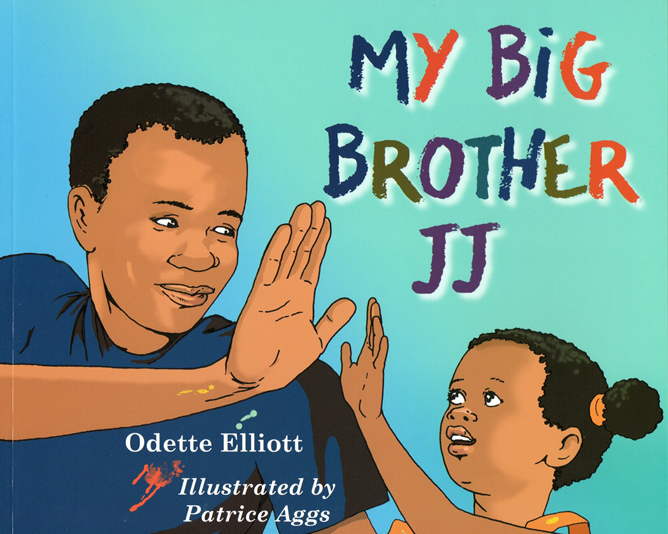 Odette Elliott’s fifth picture book “My Big Brother JJ”, was published by Tamarind in September 2009. This is a warm, family story aimed at children aged five to eight. It reflects the children’s close relationship and is beautifully illustrated by Patrice Aggs.
It is the half term holiday. Jasmine’s and JJ’s mother has to go to work. Teenager JJ is in charge. He thinks of lots of fun things for him and Jasmine to do together. On the last day they decide to make something for Mum. Will it work? See the 5-Star review on amazon.co.uk!! Odette’s first picture book, “Under Sammy’s Bed”, was published in 1989 and books in this series appeared on BBC children’s programmes. Odette’s is a multi-racial family and this is reflected in her writing. She has also written a collection of school stories called Nightingale News.

Can you solve the mystery in John O’Leary’s latest book?
Author, illustrator and paper engineer John O’Leary’s new picture book, Detective Paws and the Case of The Golden Cat, is now out.
The Golden Cat has been stolen from Mogworth Hall and private detective Dick Paws is on the case. Help him dig up the clues, sniff through the evidence and point the paw at the dodgy wrongdoers in this interactive who-done-it mystery. Turn the wheels, lift the flaps, open the map, flick through the mini books and use the photofit as you work alongside Detective Paws to bring the investigation to a close and ensure that justice is done.
Originally from Ireland, John O’Leary now lives and works in North London.
This is his 10th picture book for Tango Books. For more information about John click here and to buy the book, click here.
 Buzz about Books